
Your basement holds untapped potential. It's not just a storage area or an afterthought; it's a blank canvas waiting to become a functional, beautiful part of your home. The single most impactful element in this process is color. Choosing the right paint can dramatically alter the perception of light, space, and mood, turning a dark, underutilized area into a bright home office, a cozy family retreat, or a stylish entertainment lounge.
However, basements present unique challenges. Limited natural light, potential moisture, and lower ceilings make color selection a critical decision that goes beyond simple preference. This guide moves past generic advice, offering 10 specific and professionally curated basement paint color ideas designed for modern living. We will explore how to choose palettes that not only look stunning but also address common basement issues head-on.
You will find actionable advice on everything from selecting the right paint finish to strategic lighting and essential preparation, with special considerations for Connecticut homes. Whether you're a homeowner in Stamford, a builder in Fairfield County, or a project manager in Westchester County, these ideas provide the inspiration and practical steps needed to reclaim your lower level. Let's explore how strategic color choices can redefine your basement's purpose and value, turning it into one of the most inviting rooms in your house.
1. Soft Gray – The Versatile Professional Choice
Soft gray is a cornerstone of modern basement design, providing a neutral and professional backdrop that adapts to nearly any decor style. Unlike stark white, which can feel cold and clinical in a subterranean space, a well-chosen soft gray offers warmth and depth. It’s one of the most reliable basement paint color ideas because it creates an airy, open feeling without sacrificing a sense of coziness.
This color family excels at masking the minor imperfections often found on basement walls, from small settlement cracks to subtle stains. Its inherent neutrality allows furniture, artwork, and accent pieces to stand out, giving you complete design freedom. We frequently see this palette used in high-end Fairfield County home offices and guest suites in Westchester County, where homeowners want a clean, polished look that feels both inviting and upmarket.
Why It Works for Connecticut Basements
In many CT homes, basements serve multiple functions, from a professional home gym to a comfortable family recreation room. Soft gray provides a seamless transition between these zones. It reflects both natural and artificial light effectively, a critical factor in spaces with limited windows.
Pro Tip: The undertone of your gray paint is crucial. A warm gray with beige or taupe undertones, like Sherwin-Williams' Accessible Beige, fosters a traditional, cozy atmosphere. A cool gray with blue or green undertones, such as Benjamin Moore's Gray Owl, delivers a crisp, contemporary feel.
Implementation Tips
To achieve a professional finish with soft gray, consider these practical steps:
- Test Extensively: Before committing, paint large sample swatches on multiple walls. Observe how the color changes throughout the day with shifting light.
- Choose the Right Finish: A matte or eggshell finish is ideal for basements. It minimizes glare from overhead lighting and does an excellent job hiding surface flaws.
- Create Contrast: Pair gray walls with crisp white trim and ceiling paint. This classic combination adds definition and makes the space feel taller and more structured.
- Proper Preparation: Basements demand meticulous prep work. For lasting results, especially in moisture-prone areas, use a high-quality, mold-and-mildew-resistant primer. The expert painters at CP Painting Company always emphasize this step to ensure a durable, beautiful finish.
2. Deep Navy Blue – Creating Sophisticated Depth
Deep navy blue transforms a basement from a simple lower level into an intimate, sophisticated retreat. This bold choice is one of the most effective basement paint color ideas for creating a specific mood, such as a high-end lounge or private cinema. Unlike lighter colors that aim to make a space feel larger, navy embraces the inherent coziness of a basement, creating a cocoon-like environment that feels intentional, elegant, and warm.
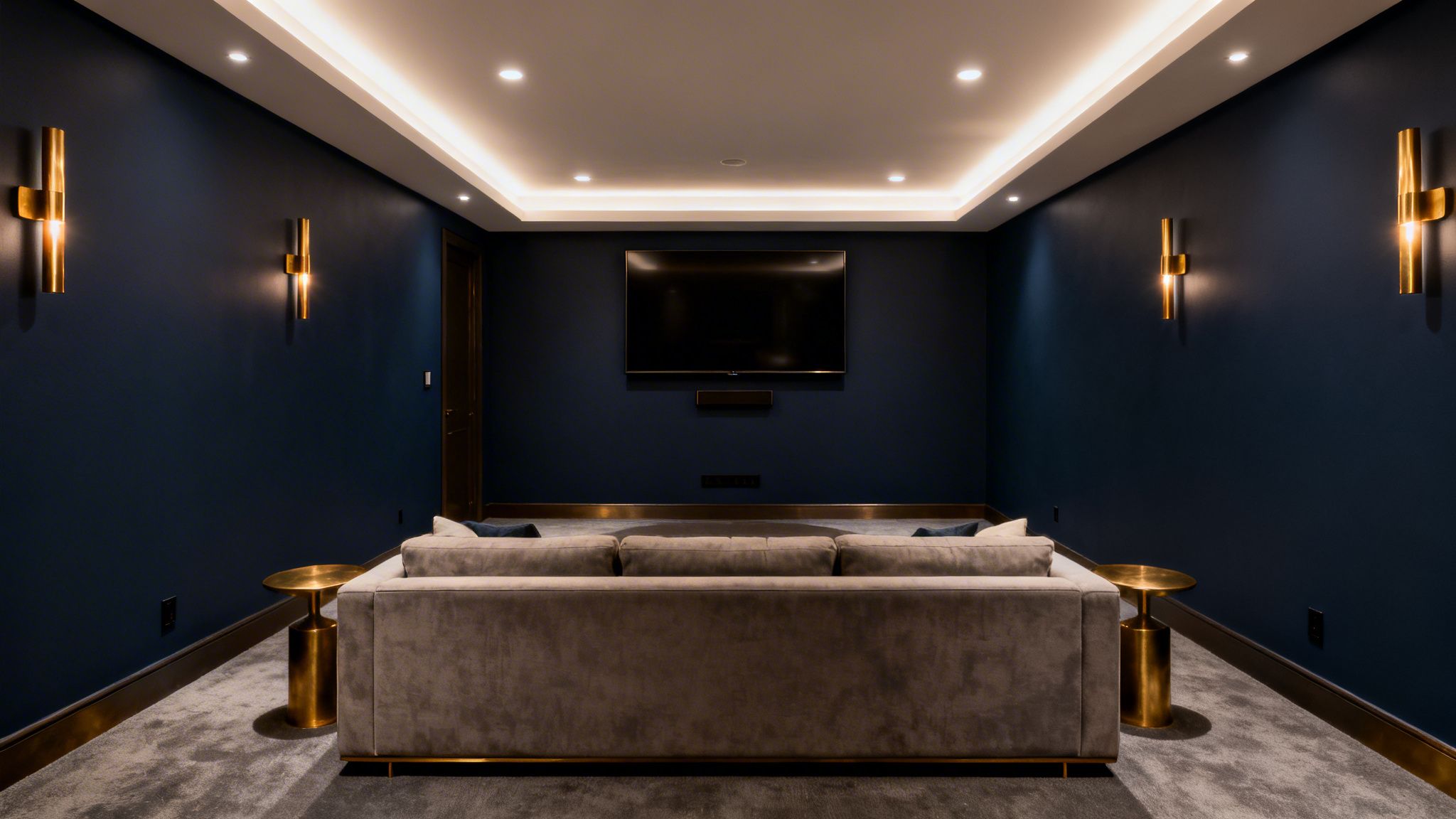
This rich color is particularly popular for dedicated entertainment spaces. We often recommend it for home theater rooms in Westchester County and wine cellars in Fairfield County homes, where the goal is to establish a dramatic and immersive atmosphere. The dark walls minimize light reflection, making it ideal for screen viewing, and lend an air of exclusivity and purpose to the room.
Why It Works for Connecticut Basements
In many Connecticut homes, finished basements are being designed as specialized zones for entertainment or relaxation. A deep navy blue wall color provides a strong foundation for these uses. It’s an excellent choice for a professional home office in Stamford or a speakeasy-style bar area, giving the space a distinct identity separate from the rest of the house.
Pro Tip: Your lighting strategy is everything with a dark color. Ample, layered lighting is not optional; it's a requirement. A combination of recessed ceiling lights, wall sconces, and task lighting will prevent the space from feeling like a cave and will instead highlight the rich depth of the navy hue.
Implementation Tips
To use deep navy blue successfully in your basement, follow these key steps:
- Sample Key Colors: Test popular navy shades under your specific basement lighting. Sherwin-Williams' Naval (SW 6244) offers a classic, true navy, while Benjamin Moore's Hale Navy (HC-154) provides a slightly more muted, historic feel.
- Choose the Right Finish: An eggshell or satin finish works best. These finishes offer a slight sheen that subtly reflects light, adding dimension to the color without the high gloss of a semi-gloss.
- Balance with Light Elements: To avoid overwhelming the space, pair navy walls with a crisp white ceiling and light-colored flooring, such as light wood or pale carpet. White trim in a semi-gloss finish will create sharp, clean lines that frame the dark walls beautifully.
- Strategic Application: If your basement is small or has very low ceilings, consider using navy on a single accent wall behind a TV or bar. This provides the desired dramatic effect without enclosing the entire room in darkness. The skilled professionals at CP Painting Company can advise on the best application for your specific layout.
3. Warm White – Clean, Bright Contemporary Style
Warm white creates an open, airy basement environment that maximizes light reflection for a fresh, contemporary aesthetic. Unlike stark, cool whites that can make a subterranean space feel sterile or clinical, warm whites with subtle beige or cream undertones prevent this coldness. This choice is one of the most effective basement paint color ideas for transforming a dark area into a bright, inviting part of the home.
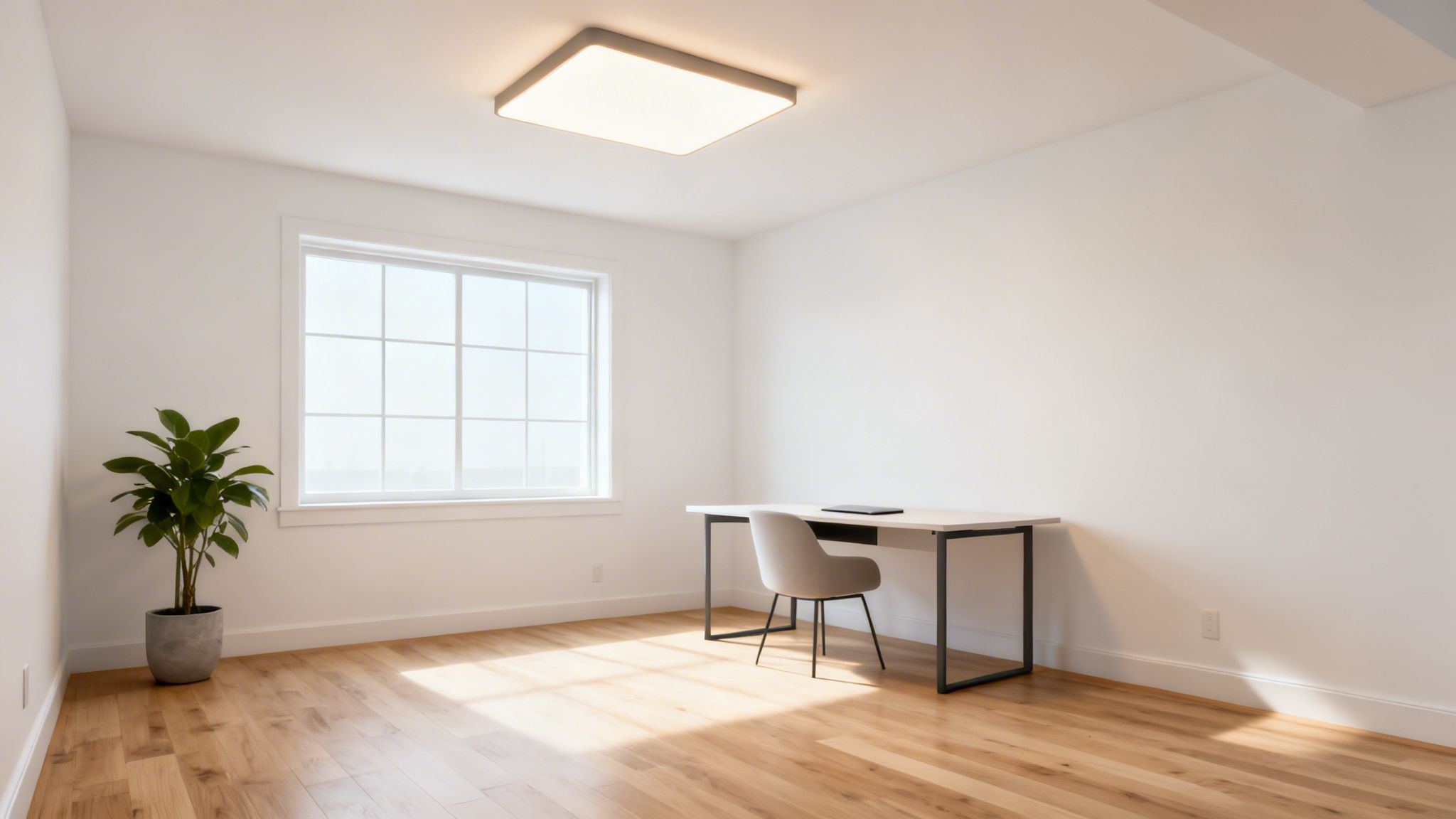
This color palette is exceptionally well-suited for basements repurposed as functional living spaces. We see it used in modern finished basements converted to home offices in Stamford, bright family recreation rooms in New Haven County, and contemporary art studios in Westchester County. The reflective quality of warm white makes any space feel larger and more open, which is a significant advantage in areas with limited square footage or natural light.
Why It Works for Connecticut Basements
In many Connecticut homes, maximizing brightness in a basement is a top priority. A warm white bounces both artificial and natural light around the room, making it feel cheerful and expansive year-round. It offers a clean slate that supports a wide range of decor, from minimalist and modern to a more decorated, cozy style, providing homeowners with great flexibility.
Pro Tip: The success of white paint in a basement is all about the undertone. A white with a yellow or creamy base, such as Benjamin Moore's Cloud White or Sherwin-Williams' Alabaster, will feel inviting and bright. A white with a blue or gray base can look dingy or shadowed without abundant natural light.
Implementation Tips
To get a beautiful and lasting warm white finish, careful planning is essential:
- Address Moisture First: Before a single can of paint is opened, ensure the basement is completely dry. Use a high-quality waterproofing sealer on concrete walls to block any potential moisture from compromising the paint job.
- Prime Thoroughly: Use a high-quality, stain-blocking primer. This step is critical for white paint, as it prevents old stains or wall imperfections from bleeding through and ensures the final color is true and even.
- Pick the Right Finish: A satin or eggshell finish offers the best balance for a white basement. These finishes are more durable and easier to clean than flat or matte, a key benefit in high-traffic family areas, while still minimizing glare.
- Add Definition with Trim: Pair your warm white walls with a crisp, pure white trim. This contrast will define the architectural details of the space and make the walls’ warm undertones stand out more clearly. The professionals at CP Painting Company always recommend this for a sharp, completed look.
4. Charcoal Gray – Modern Industrial Appeal
Charcoal gray brings a modern, industrial edge to basement spaces, creating a sophisticated and contemporary aesthetic. This dramatic neutral bridges the gap between mid-tone gray and stark black, offering a bold impact while remaining surprisingly versatile. Charcoal is an excellent choice among basement paint color ideas for showcasing exposed brick, concrete floors, or steel support beams common in industrial-style renovations.
This deeper hue creates an intimate, enveloping atmosphere perfect for a high-end media room, a creative studio, or a moody home bar. It has a grounding effect that feels intentional and luxurious, often seen in converted loft-style basements in Stamford, CT, or modern art galleries in Westchester County. The color’s depth makes it a powerful design tool for defining a space and creating a distinct mood.
Why It Works for Connecticut Basements
In many new and renovated Connecticut homes, basements are being designed with a more urban, industrial feel. Charcoal gray walls provide the perfect foundation for this style. The color works beautifully with the natural textures of stone foundations and can make a modern entertainment system or a sleek home gym feel fully integrated and purposeful.
Pro Tip: Don't be afraid to go dark, but balance is key. A deep charcoal like Benjamin Moore's Kendall Charcoal or Sherwin-Williams' Iron Ore can make a room feel incredibly chic, but it needs sufficient lighting to avoid feeling oppressive. Test your chosen shade in the evening with all your lights on.
Implementation Tips
To master this bold look without overwhelming your space, follow these guidelines:
- Strategic Lighting: Install multiple layers of light. Use recessed ceiling lights for general illumination, track lighting to highlight artwork, and accent lamps to create warm pools of light.
- Create Contrast: Pair charcoal walls with a bright white ceiling and light-colored flooring, such as pale wood or light gray concrete. This prevents the room from feeling too heavy and draws the eye upward.
- Use as an Accent: For smaller or light-deprived basements, use charcoal on a single accent wall behind a TV or a bar. This delivers the dramatic effect without closing in the space.
- Prime for Darkness: When painting a dark color, a tinted primer is essential for achieving a rich, even finish with fewer coats. The professionals at CP Painting Company recommend a gray-tinted primer to create the ideal base for a deep charcoal.
5. Soft Sage Green – Calming Natural Elements
Soft sage green brings the tranquility of nature into a basement, creating a serene escape that feels both refreshing and sophisticated. This muted, earthy green embodies biophilic design principles by forging a connection to the outdoors, which is especially valuable in a subterranean setting. As one of the most calming basement paint color ideas, it’s an ideal choice for spaces dedicated to relaxation, such as a home spa, yoga studio, or quiet reading nook.
This color provides a gentle, organic alternative to standard neutrals like gray or beige, yet it maintains enough subtlety to complement a wide range of decor styles. We’ve seen this color used to great effect in wellness-focused basements throughout Connecticut, from modern farmhouse designs in Stamford to dedicated meditation rooms in Hartford County residences. It adds a touch of color without overwhelming the space, making the room feel grounded and peaceful.
Why It Works for Connecticut Basements
For CT homeowners looking to create a personal sanctuary, soft sage green is a perfect fit. It introduces a sense of well-being and calm, transforming a functional basement into a restorative retreat. The color’s earthy quality pairs beautifully with the natural stone and wood elements common in many regional homes, creating a cohesive and harmonious design.
Pro Tip: The undertones of sage are key to its success in a basement. A shade with warm, slightly yellow or gray undertones, like Sherwin-Williams Sea Salt, feels cozy and inviting. A cooler sage with blue undertones, like Benjamin Moore's Healing Aloe, provides a crisper, more spa-like atmosphere.
Implementation Tips
To bring the restorative power of sage green to your basement, follow these guidelines:
- Test in Your Light: Sage can shift dramatically under different lighting. Paint large swatches on several walls to see how it looks with your specific natural light exposure and artificial light sources.
- Choose a Softer Finish: An eggshell or satin finish enhances the soft, velvety quality of sage green. These finishes offer a slight sheen that helps reflect light gently without causing glare, and they are more durable and easier to clean than matte.
- Pair with Natural Textures: Complement sage walls with warm wood tones, jute rugs, linen curtains, and plenty of live plants. This enhances the biophilic connection and creates a layered, tactile environment.
- Focus on a Feature Wall: If you're hesitant to paint the entire room, a sage green accent wall behind a sofa or in a meditation corner can be just as impactful, especially when paired with a warm off-white on the other walls. The professionals at CP Painting Company can help you achieve a flawless feature wall with clean, crisp lines.
6. Warm Taupe – Sophisticated Neutral Warmth
Warm taupe bridges the gap between cozy brown and modern gray, offering a neutral foundation with significant warmth and character. This makes it one of the most flexible basement paint color ideas for homeowners who find gray too cool but want to avoid committing to a more saturated color. The brown undertones create an inviting, comfortable atmosphere that feels both grounded and refined.
This color is exceptionally effective in transitional or traditional designs, adding a layer of maturity and depth. In Stamford, CT, we see warm taupe used to create sophisticated family rooms, while in Westchester County, it provides the perfect backdrop for traditional home bars. It gives a basement a high-end, finished feel without being overly formal, making the space instantly welcoming.
Why It Works for Connecticut Basements
Connecticut basements often benefit from colors that add warmth to counteract the subterranean feel. Warm taupe excels here, making spaces with limited natural light feel cozier and more intimate. It pairs beautifully with the warm wood tones and stone accents frequently found in Fairfield County homes, creating a cohesive and well-designed look.
Pro Tip: The undertone is key. Look for a taupe with clear brown or beige undertones, like Sherwin-Williams' Urban Putty. Avoid taupes with strong pink or purple casts, as they can look dated and are harder to decorate around in a basement setting.
Implementation Tips
To use warm taupe effectively in your basement project, follow these guidelines:
- Sample in Low Light: Test large swatches of your chosen taupe in the darkest corners of your basement. This is where the undertones will be most apparent.
- Choose a Subtle Sheen: A satin finish is an excellent choice for warm taupe. It provides a soft, low-lustre glow that helps bounce a little light around without highlighting imperfections like a semi-gloss would.
- Complement with Warm Whites: Use cream or a warm off-white for trim, doors, and the ceiling. This creates a soft contrast that brightens the space while maintaining an overall warm and unified aesthetic.
- Prioritize Surface Prep: To ensure your sophisticated taupe looks its best, proper wall preparation is non-negotiable. The professionals at CP Painting Company always apply a high-quality, moisture-resistant primer to seal the walls and prevent issues that could compromise the paint job.
7. Deep Forest Green – Elegant, Moody Atmosphere
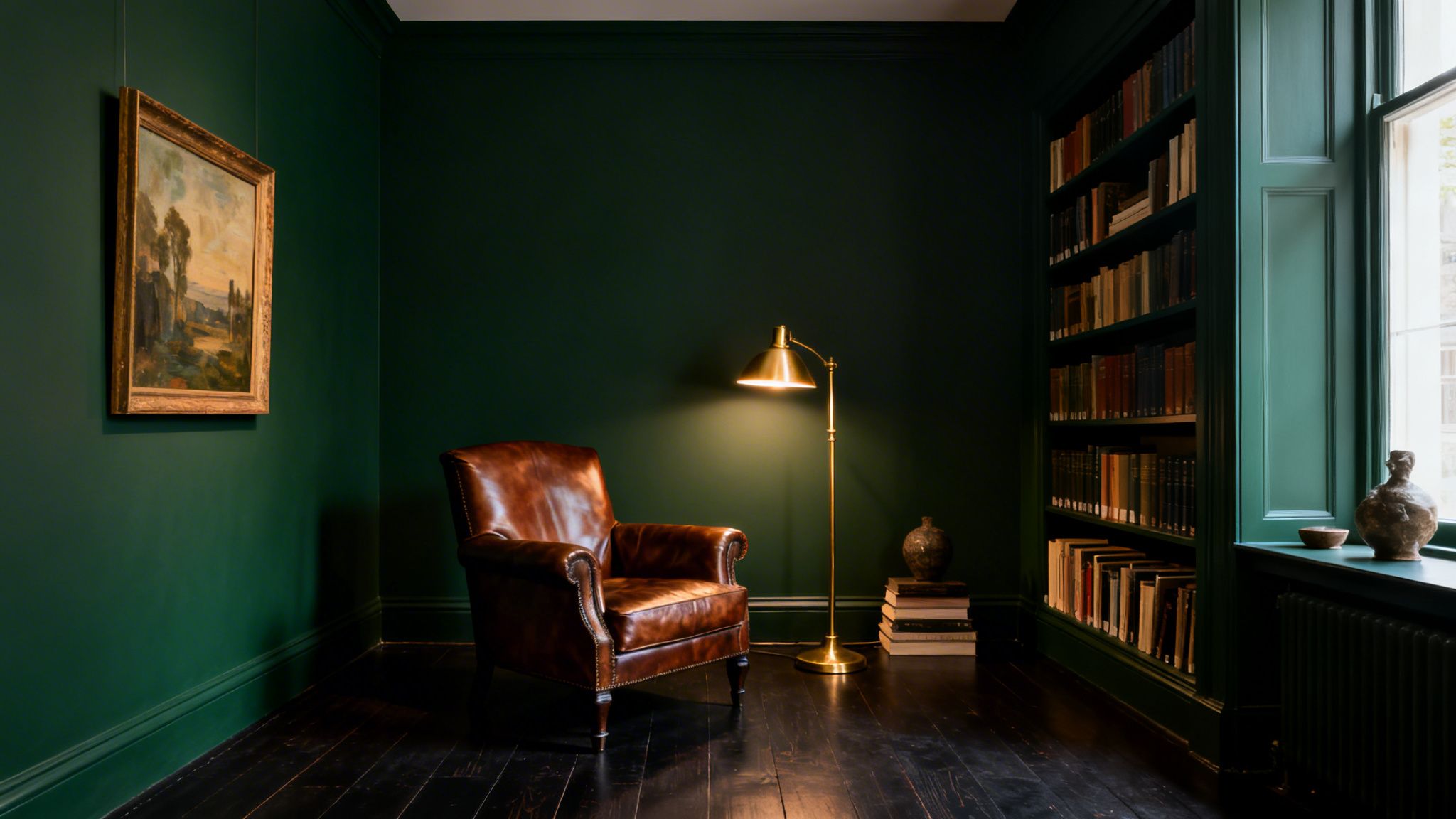
For a basement that feels less like a subordinate space and more like a destination, deep forest green offers a luxurious and moody atmosphere. This rich color transforms a standard room into a sophisticated retreat, perfect for a home library, a distinguished study, or an upscale wine room. While bold, forest green has an inherent connection to nature that makes it feel grounded and surprisingly neutral, creating a cocoon-like environment ideal for quiet contemplation or intimate entertaining.
This color choice is particularly effective at masking minor wall imperfections, a common issue in basements. Its depth and saturation create a dramatic yet calming backdrop that allows wood tones, leather textures, and metallic accents to shine. We have seen this color used to great effect in high-end Fairfield County properties to create gallery-style walls and in Westchester County homes for cozy, intellectual study spaces.
Why It Works for Connecticut Basements
In many Connecticut homes, the basement is an opportunity to create a unique space separate from the main living areas. Deep green provides that sense of escapism, turning a potentially sterile area into a warm, inviting den or home theater. It absorbs light in a pleasing way, reducing glare from screens and creating an immersive experience.
Pro Tip: The undertone is key to achieving the right mood. A jewel-toned green like Benjamin Moore's Hunter Green creates a classic, heritage feel. For a slightly more subdued and modern take, a muted shade like Sherwin-Williams' Evergreen Fog offers a sophisticated, earthy quality.
Implementation Tips
To successfully execute a dark, moody color like forest green, follow these essential steps:
- Prioritize Lighting: This color demands excellent lighting. Layer ambient, task, and accent lighting. Use warm-toned brass or gold fixtures to complement the green and prevent the space from feeling too dark.
- Choose the Right Finish: An eggshell or satin finish provides a subtle sheen that reflects a small amount of light, giving the color depth without highlighting imperfections. A matte finish can also work for a truly velvety, non-reflective look.
- Create Balance: To avoid a cave-like feeling, pair deep green walls with a crisp white or warm off-white ceiling and trim. This contrast adds definition and makes the ceiling appear higher.
- Test in All Conditions: Paint large swatches on different walls and observe them in both daytime (if you have windows) and evening with your planned artificial lighting. The color can shift dramatically. The professional painters at CP Painting Company always recommend this step to ensure you love the final result.
8. Pale Cream – Soft, Elegant Backdrop
Pale cream offers a sophisticated alternative to stark white, providing softness and warmth while maintaining brightness. This color works exceptionally well in basements where the goal is to maximize light reflection without the clinical feel of pure white. Pale cream creates an elegant, refined environment, making it one of the best basement paint color ideas for high-end residential properties and upscale living areas.
This shade brings a timeless quality that feels both airy and grounded. It is perfect for creating a polished foundation in finished basements, such as those found in Stamford, CT properties or professional office spaces in Westchester County. The subtle warmth of cream prevents the space from feeling cold or impersonal, a common challenge in below-grade rooms.
Why It Works for Connecticut Basements
In many Fairfield County homes, basements are transformed into sophisticated living areas or guest suites. Pale cream provides an ideal backdrop for these high-end applications, reflecting both natural and artificial light to make the space feel larger and more inviting. Its inherent warmth complements the classic architecture and design preferences common in the region.
Pro Tip: The undertone is key. Select creams with soft, warm undertones like Benjamin Moore's Cloud White or Sherwin-Williams' Alabaster. Avoid overly yellow creams, which can appear dated or dingy in the low-light conditions typical of basements.
Implementation Tips
To achieve a professional and lasting finish with pale cream, follow these steps:
- Test on Primed Surfaces: Always test paint samples on a properly sealed or primed wall. The underlying surface color and porosity can dramatically alter how a light color like cream appears.
- Choose the Right Finish: A satin finish is a great choice for pale cream walls. It offers a soft sheen that helps with light reflection and is more durable and stain-resistant than matte or eggshell, which is important for active family spaces.
- Create Subtle Definition: Pair pale cream walls with crisp, warm white trim or a slightly deeper light gray. This creates a gentle contrast that adds architectural definition without being jarring.
- Ensure Proper Waterproofing: Before applying any light-colored paint, complete waterproofing is essential. The expert painters at CP Painting Company always stress that even minor moisture can cause stains and peeling, which are highly visible on pale walls.
9. Soft Blush Pink – Contemporary Warmth and Softness
Soft blush pink represents a confident, contemporary choice in basement design, introducing warmth and personality while maintaining a sophisticated air. Forget the juvenile pinks of the past; this modern iteration is muted and earthy, providing a soft glow that makes a subterranean space feel intentionally designed and inviting. It's one of the more daring basement paint color ideas, perfect for homeowners wanting to create a distinctive space with a modern, almost bespoke, feel.
This color works exceptionally well in basements intended as creative studios, chic lounges, or even a surprisingly elegant home gym. We have seen this trend gain traction in modern loft-style basements in Stamford, CT, and creative spaces across Fairfield County, where a touch of color is desired without overwhelming the room. It moves beyond pure function, turning the basement into a destination.
Why It Works for Connecticut Basements
For CT homes with a contemporary or mid-century modern aesthetic, blush pink connects the basement's design to the rest of the house. It's a color that feels both current and comforting, adding a layer of softness that counteracts the hard surfaces often found in lower levels. In a space with cool northern light, a warm blush tone prevents the room from feeling stark or sterile.
Pro Tip: The success of blush pink lies in its subtlety. Choose a dusty, muted shade with gray or beige undertones. Benjamin Moore's Coral Gables Pink is a sophisticated option, while Sherwin-Williams' Rosy Outlook offers a gentle, airy quality. Steer clear of vibrant, hot pinks that can feel dated.
Implementation Tips
To use blush pink effectively for a polished and modern basement, follow these steps:
- Test in Low Light: Sample the color on different walls and observe it under your basement's specific artificial lighting in the evening. You want to ensure it reads as sophisticated, not saccharine.
- Choose the Right Finish: An eggshell or satin finish gives the color a slight sheen that enhances its warmth without causing excessive glare. This finish is also more durable and easier to clean than matte.
- Balance with Neutrals: Pair blush walls with crisp white trim, charcoal gray accents, or even deep navy for a grounded, balanced look. This prevents the color from feeling too dominant.
- Prime for Color Accuracy: A high-quality, mold-resistant primer is non-negotiable in a basement. For a color like blush pink, the team at CP Painting Company recommends a tinted primer to ensure the final color is rich, true, and requires fewer coats.
10. Medium Gray-Blue – Balanced Cool Tone Sophistication
Medium gray-blue offers a sophisticated middle ground between pure gray and bold blue, creating a balanced, contemporary aesthetic perfect for a variety of basement styles. This color family is popular in modern interior design for its ability to perform well in any lighting condition while providing subtle character. It’s an excellent choice for basement paint color ideas when you want more personality than gray but without the full commitment to a stronger color.
This shade works exceptionally well in basements designed for relaxation, focused work, or modern living. We see it used in professional home offices in Stamford, CT, and transitional-style basements in Hartford County, where it provides a calming yet serious backdrop. The color is subtle enough to feel expansive while adding a touch of cool-toned elegance that feels both current and timeless.
Why It Works for Connecticut Basements
In many Connecticut homes, basements are being converted into functional, stylish spaces like home offices or contemporary family rooms. A medium gray-blue sets a professional and serene tone, ideal for productivity or unwinding. Its balanced nature reflects light beautifully, preventing the space from feeling too dark or moody, which is a common concern in subterranean rooms.
Pro Tip: The secret to a successful gray-blue is finding a shade with the right balance. Colors like Benjamin Moore's Palladian Blue or Sherwin-Williams' Sea Salt have a soft, airy quality. Avoid options with heavy purple undertones, which can feel dated or overly moody in low-light environments.
Implementation Tips
To bring this balanced, cool-toned look to your basement, follow these guidelines:
- Test in All Lights: Sample the paint on several walls to see how it interacts with both natural light from egress windows and your chosen artificial lighting at different times of day.
- Select the Right Finish: A satin finish is a great choice for this color in a home office or modern living area. It offers a slight sheen that is easy to clean and adds a touch of professional polish without significant glare.
- Frame the Color: Use crisp white or a very light gray trim to frame the gray-blue walls. This contrast creates sharp, clean lines and makes the primary color pop, adding architectural definition.
- Don't Skip the Prep: A beautiful color deserves a perfect canvas. The professionals at CP Painting Company know that proper surface preparation and using a high-quality, moisture-resistant primer are non-negotiable for a durable, flawless finish in any basement.
Top 10 Basement Paint Colors Comparison
| Color / Finish | 🔄 Implementation Complexity | ⚡ Resource Requirements | ⭐ Expected Outcomes | 📊 Ideal Use Cases | 💡 Key Advantages / Tips |
|---|---|---|---|---|---|
| Soft Gray – The Versatile Professional Choice | Low 🔄 (straightforward prep) | Moderate ⚡ (standard paint & primer) | Professional, airy, broadly appealing ⭐⭐⭐⭐ | Finished living areas, home offices, rental/resale spaces | Test on multiple walls; matte finish; pair with white trim 💡 |
| Deep Navy Blue – Creating Sophisticated Depth | Medium-High 🔄 (lighting plan required) | High ⚡ (premium paint, enhanced lighting) | Dramatic, intimate, excellent at masking stains ⭐⭐⭐⭐ | Media rooms, wine cellars, upscale lounges | Use recessed/accent lighting; consider accent walls; test samples 💡 |
| Warm White – Clean, Bright Contemporary Style | Medium 🔄 (thorough prep & primer) | Moderate-High ⚡ (quality primer, moisture remediation) | Bright, spacious, modern backdrop ⭐⭐⭐ | Home offices, recreation areas, studios | Choose warm undertones; satin finish; ensure waterproofing 💡 |
| Charcoal Gray – Modern Industrial Appeal | Medium 🔄 (lighting strategy important) | Moderate ⚡ (quality paint, targeted lighting) | Sophisticated, dramatic contrast; hides imperfections well ⭐⭐⭐ | Loft-style basements, galleries, creative studios | Pair with light ceilings/flooring; test in evening light 💡 |
| Soft Sage Green – Calming Natural Elements | Low-Medium 🔄 (lighting tests recommended) | Moderate ⚡ (paint + natural accents) | Calming, biophilic, subtly refreshing ⭐⭐⭐ | Wellness rooms, meditation/spa areas, modern farmhouse basements | Select warm undertones; pair with wood and plants; test lighting 💡 |
| Warm Taupe – Sophisticated Neutral Warmth | Medium 🔄 (undertone selection critical) | Moderate ⚡ (quality paint, sample testing) | Warm, inviting neutral with personality ⭐⭐⭐ | Family rooms, traditional bars, transitional spaces | Avoid muddy tones; use cream trim; test samples in-situ 💡 |
| Deep Forest Green – Elegant, Moody Atmosphere | High 🔄 (extensive lighting & selection) | High ⚡ (premium paint, accent lighting, decor) | Luxurious, moody, conceals imperfections strongly ⭐⭐⭐⭐ | Libraries, wine rooms, upscale home theaters | Use warm lighting and light trim; test day & night; consider accent walls 💡 |
| Pale Cream – Soft, Elegant Backdrop | Medium 🔄 (undertone & prep important) | Moderate ⚡ (primer, careful selection) | Soft, warm brightness; refined backdrop ⭐⭐⭐ | High-end living areas, professional offices | Avoid overly yellow creams; satin finish; ensure sealer/moisture remediation 💡 |
| Soft Blush Pink – Contemporary Warmth and Softness | Low-Medium 🔄 (best as accent) | Moderate ⚡ (muted shades, complementary finishes) | Contemporary, personable accent; trend-forward ⭐⭐ | Creative studios, modern lounges, accent walls | Choose muted blush; pair with gray/ brass; prefer accent wall use 💡 |
| Medium Gray-Blue – Balanced Cool Tone Sophistication | Medium 🔄 (undertone testing advised) | Moderate ⚡ (consistent brand selection, samples) | Calming, professional with subtle color interest ⭐⭐⭐ | Home offices, contemporary family rooms, transitional spaces | Test in multiple lights; avoid purple undertones; use white trim for definition 💡 |
Bringing Your Vision to Life with Professional Expertise
Transforming your basement from a functional afterthought into a core part of your home begins with inspiration, but it truly comes to life through meticulous execution. Throughout this guide, we've explored a spectrum of basement paint color ideas, each with the power to completely reshape your subterranean space. From the versatile professionalism of Soft Gray and the bright, contemporary feel of Warm White to the moody elegance of Deep Forest Green, the right hue sets the stage for your desired atmosphere.
Choosing a color is a significant decision, yet it's only one piece of a much larger puzzle. The true success of any basement renovation lies in addressing the unique challenges presented by below-grade environments. This is particularly true for homes in Connecticut and New York, where fluctuating humidity levels and specific building standards demand a higher level of technical knowledge.
From Color Chip to Finished Wall: The Professional Difference
The journey from a paint swatch to a flawless, durable wall involves critical steps that go far beyond simply applying a coat of paint. This is where the value of professional expertise becomes undeniable. A successful basement project hinges on a few non-negotiable pillars:
- Intensive Surface Preparation: Unlike upstairs rooms, basement walls often require extensive preparation. This includes cleaning away efflorescence (salt deposits from moisture), repairing cracks in the foundation, and ensuring the surface is completely dry and sound before any primer is applied.
- Strategic Moisture Mitigation: A professional painter’s first priority in a basement is to assess and address moisture. This involves using specialized moisture-resistant primers that create a barrier to prevent water from seeping through and causing paint to peel, bubble, or fail. Ignoring this step is the single biggest cause of failed basement paint jobs.
- Product Selection Mastery: The paint aisle can be overwhelming, but experts know exactly what to look for. For basements, this means selecting high-quality acrylic latex paints with built-in mildewcide and a durable, washable finish. The sheen, from eggshell to satin, also plays a critical role in how light is reflected and how easy the walls are to clean.
Key Takeaway: The longevity of your basement paint job is directly proportional to the quality of the preparation and the suitability of the products used. A professional ensures that the foundation of your project is solid, preventing costly repairs and repainting down the line.
Why Local Expertise Matters in CT and NY
For homeowners, builders, and interior designers in Fairfield County, CT, and Westchester County, NY, local knowledge is an invaluable asset. A contractor familiar with the regional climate and building codes can navigate a project with precision and compliance. For instance, they understand the specific ventilation requirements and materials best suited to handle the humid summers and cold winters characteristic of the area.
Engaging a professional service like CP Painting Company means you are not just hiring painters; you are partnering with certified experts who understand the local landscape. We ensure that every project, whether in a Stamford high-rise or a Greenwich colonial, adheres to the standards set by the Connecticut Department of Consumer Protection. This commitment to quality and compliance provides peace of mind and guarantees a result that is not only beautiful but also safe, durable, and structurally sound.
Ultimately, investing in professional painting services is an investment in your home’s value and your own enjoyment. It bridges the gap between your creative basement paint color ideas and the reality of a perfectly executed, long-lasting space you can be proud of for years to come.
Ready to turn your basement paint color ideas into a stunning and durable reality? The experts at CP Painting Company specialize in transforming challenging basement environments in Connecticut and New York into beautiful, functional spaces. Contact us today for a free, no-obligation estimate and let our certified team handle the complexities of your project with precision and care.


